Rebecca* arrived at Kids Alive Guatemala's Oasis campus carrying many of the questions that often follow children who have experienced trauma and separation from their family.
Am I safe?
Will anyone understand me?
Do I truly belong anywhere?
At Oasis, Rebecca found a team of caregivers, counselors, social workers, and educators committed to helping her heal. Over the next year, she received individualized support as she worked through emotional challenges, struggled to communicate her thoughts and feelings, and faced difficulties in school. Through consistent encouragement and care rooted in Christ's enduring love, she slowly began growing in confidence and discovering new possibilities for her future. As the team cared for Rebecca's physical and psychological healing, they were pursuing something else as well: helping her find a family where she could grow and thrive.
As Rebecca continued her healing journey, Seleny and the Oasis team began carefully exploring possible extended family members who could provide a safe, loving home for her long-term future. Over time, they identified an opportunity for kinship care, where children are welcomed into the care of vetted relatives rather than remaining in residential care.
Eventually, their search led them to her aunt.
At first, Rebecca's aunt knew very little about the situation. She had no idea what her niece had experienced nor the challenges she was navigating. When the Kids Alive team explained Rebecca's circumstances and asked whether she might be willing to help, God had already been working in her heart to respond with an immediate "yes."
That moment was an answered prayer.
"Her aunt was a miracle for Rebecca. We didn't know much about her at first—but when she found out about Rebecca's situation, she said, 'I want to help my niece.'"
The journey toward reunification did not happen overnight.
The Oasis team worked carefully to help Rebecca and her aunt build their relationship while also preparing the family for what reunification would require. Rebecca's aunt learned about her academic challenges, her difficulty expressing herself at times, and the long-term support she would continue to need as she healed.
Even knowing those realities, her aunt's family remained committed.
"Even knowing that Rebecca has learning challenges—that it's hard for her to grasp some things—this family said, 'We want to support her,'" Seleny explained. "Her aunt is an extraordinarily patient person. That patience has helped Rebecca."
Over time, a deep bond of trust began to grow between them.
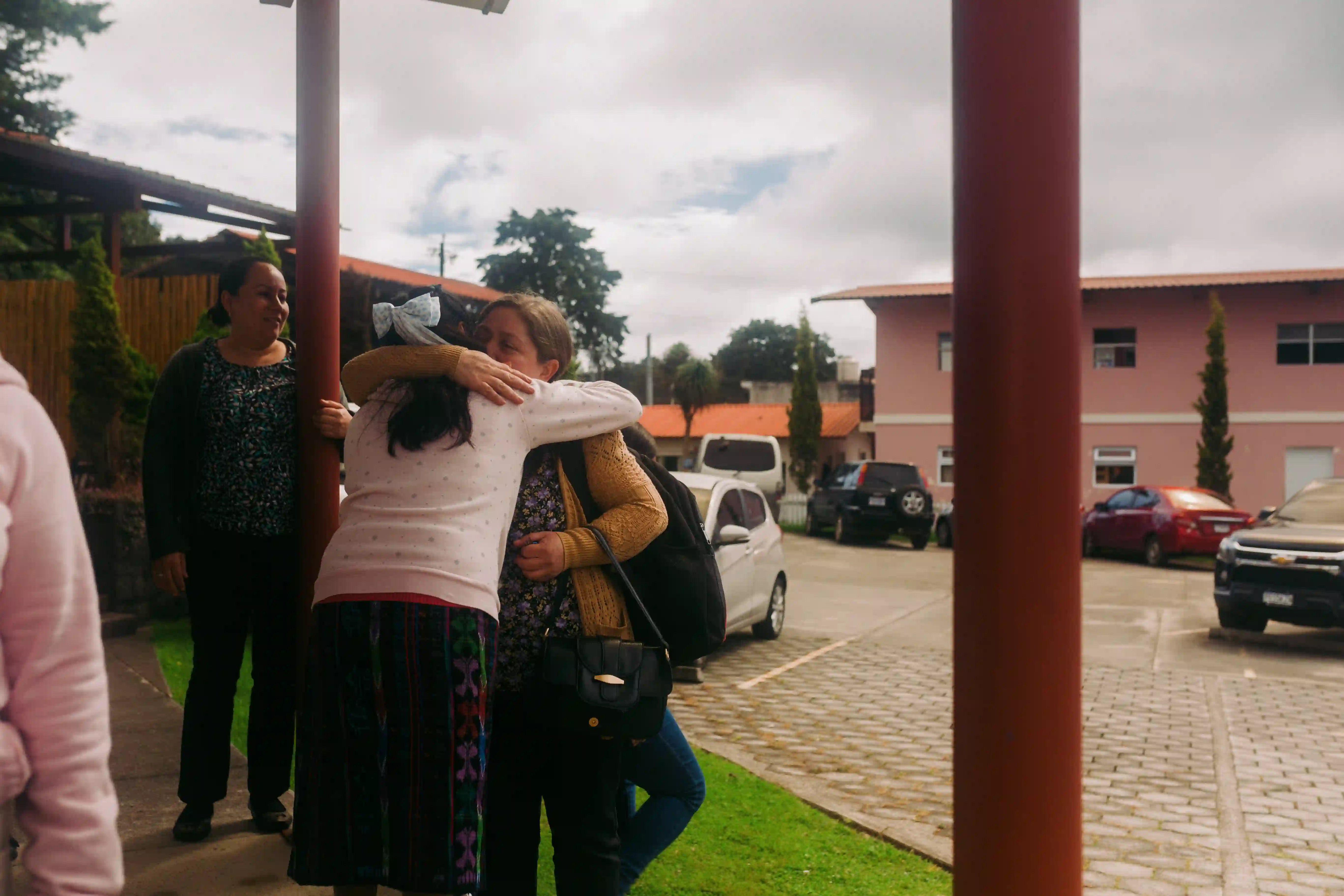
One of the most meaningful moments in her reunification journey came during Rebecca's quinceañera celebration in 2025. Family members who had once felt distant showed up to celebrate alongside her. Her aunt was there. Her relatives were there. For Rebecca, it became more than a birthday celebration.
It became a reminder that she was not alone.
She was seen. She was wanted. She belonged.
Shortly after her quinceañera, Rebecca moved in with her aunt and began a new chapter surrounded by family.
The transition brought new opportunities and new adjustments. But Kids Alive's involvement did not end when Rebecca left Oasis.
The team continued visiting her regularly through psychology appointments, social work follow-ups, and weekly phone calls. Counselors met with Rebecca and her family in their home and community, helping everyone navigate the challenges that naturally come with reunification, and strengthening the relationships that were continuing to grow.
At a recent court hearing, the judge overseeing Rebecca's case was so encouraged by the progress being made that she authorized continued follow-up support to help ensure Rebecca's long-term success.
The team also continued supporting Rebecca's education and development. They helped connect the family with educational resources and practical strategies to support learning at home. Sometimes those moments are beautifully simple. While running errands together, Rebecca's aunt points to signs and words and encourages Rebecca to read them aloud—small acts of patience and encouragement that help her continue growing.
Rebecca is studying while also training in part-time work to build important life skills. She is learning responsibility, managing money, and building confidence in her abilities to build a future of indepedence. Recently, she saved enough money to purchase her own "traje típico," the traditional Guatemalan clothing that has always been an important part of her identity.
"Rebecca always maintained her identity," Seleny shared. "She always wore her traje típico. And now she has the opportunity to buy one with her own money. That is something to admire about Rebecca."
Most importantly, Rebecca says she feels happy and safe with her family. She says she wants to stay with them for a long time, and her aunt feels the same way:
"Rebecca will be with us until she gets married."
Today, Rebecca continues growing, learning, working, and healing with a family that loves her deeply. A journey that began with questions about safety and belonging is becoming a future marked by family, community, and the confidence that she is chosen as a child of God.
The steadfast love of the Lord never ceases; his mercies never come to an end;they are new every morning; great is your faithfulness.(Lamentations 3:22-23)
Become a Safe Haven Champion
Become a Safe Haven Champion today and help children discover they are loved, valued, and chosen—surrounded by families and communities where bonds can mend.
Why Healing a Child Means Healing a Family: Rebecca’s story is a reminder that healing is strongest when children and families are supported together. Download our free resource guide to learn more about the role Family Systems Therapy can play in helping children and families heal, grow, and thrive together.
When Naelle* arrived at Kids Alive School Haiti, her joyful personality filled every room. At five years old, she was quick to smile, eager to make friends, and full of energy.
But when it was time to learn her letters or practice counting, everything changed.
While the other students followed along, Naelle often drifted into daydreams. She struggled to stay focused during lessons, and by the end of the first school term, it became clear she wasn't progressing at the same pace as her classmates. Reading and early math—skills she would need before entering primary school—felt overwhelming.
Her teachers could have concluded that she simply wasn't ready.
Instead, they looked deeper.
Naelle had joined Kids Alive after a community outreach worker identified her family as needing additional support and connected them with the ministry. Like many children growing up in Haiti today, she was learning in the midst of extraordinary uncertainty. In communities where instability can interrupt daily life, children often arrive at school carrying more than backpacks. Their developing minds may be working overtime to make sense of an unpredictable environment. These challenges are not signs of a lack of ability—they are reminders that children learn best when they first experience safety, consistency, and caring relationships.
Naelle's teachers were quick to adapt to her unique needs.
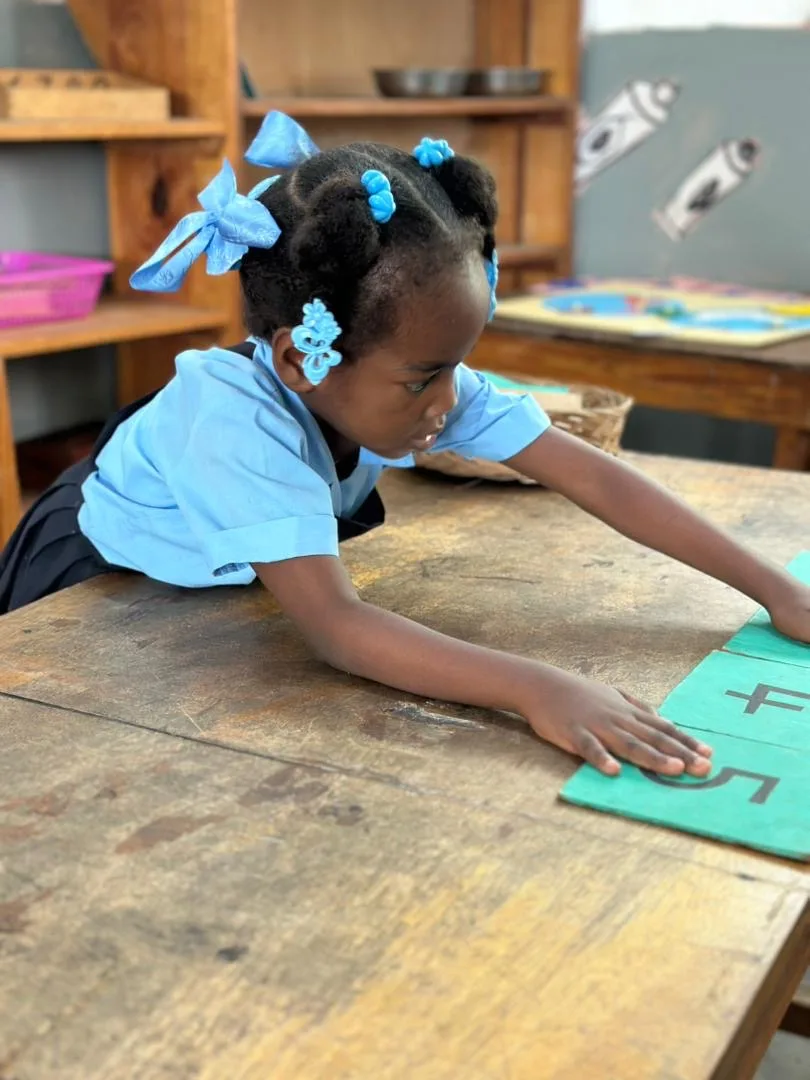
Mrs. Guettie and her classroom assistant, Mrs. Fabiola, rearranged their schedules so they could spend more one-on-one time with Naelle. In many Haitian schools, teachers face overcrowded classrooms and limited resources, making individualized support difficult. At the Kids Alive School in Haiti, teachers are equipped with the time, training, and support needed to truly know each child, adapt to their unique learning needs, and walk alongside them at a pace that helps them succeed.
Naelle was introduced to learning methods that let her explore through touch, movement, and discovery. Every letter she recognized became a small victory. Every new number was celebrated. Sometimes the reward was as simple as a new set of coloring pencils—a reminder that every step forward mattered.
Little by little, something beautiful began to happen. Naelle wasn't simply memorizing numbers.
She was discovering that she was capable.
By the end of the second term, the little girl who once struggled to stay engaged could confidently identify and sequence numbers through forty. Her reading had improved dramatically, and her teachers were confident she would be ready to enter first grade.
Even more importantly, Naelle was beginning to see herself differently.
Each morning before classes begin, students gather to speak Life Declarations together—simple truths rooted in Scripture that remind them who they are in Christ.
For Naelle, one declaration has become especially meaningful:
God is carefully creating something beautiful in her life.
Her progress isn't limited to report cards or classroom milestones. It is reflected in the confidence growing within her, the persistence she is developing, and the unique gifts God is continuing to reveal.
As Scripture reminds us,
"For we are God's masterpiece. He has created us anew in Christ Jesus, so we can do the good things he planned for us long ago." (Ephesians 2:10)
Today, Naelle continues preparing for first grade with growing confidence. She still learns in her own way and at her own pace, but she does so surrounded by teachers who refuse to let comparison define her potential.
Her story is a reminder that restorative education is about creating spaces where every child is seen, understood, and encouraged to discover the unique gifts God has placed within them.
Because sometimes the greatest lesson a child learns isn't simply how to read or count.
At the Kids Alive School in Haiti, children receive far more than an education. Through individualized learning support, daily meals, caring teachers, and Christ-centered discipleship, students discover that they are deeply loved, uniquely created, and equipped for the future God has prepared for them.
Join our Haiti Education Match today to double your impact by providing safety, stability, and restorative education for over 280 students in Haiti today.
Every week, Kids Alive International invites you into stories of restoration. We share about children beginning to heal after trauma, families finding hope through counseling and support, and communities coming together to protect children and help them thrive.
These stories matter.
Yet behind every story we share is another commitment that is just as important as the story itself.
At Kids Alive International, we are committed to safeguarding every child and family we serve.
While safeguarding is often associated with policies or procedures, at its heart safeguarding is about protecting the safety, dignity, privacy, and God-given worth of every person entrusted to our care. It shapes how we interact with children, how we welcome visitors onto our campuses, how we communicate with supporters, and even how we tell stories. Before we ever ask, "Will this story inspire someone?" we first ask, "Does this honor and protect the child?"
That question influences every decision we make.
What Does Safeguarding Mean?
Safeguarding refers to the intentional actions taken to promote the well-being of children and protect them from harm. At Kids Alive, that means creating environments where children are physically safe, emotionally secure, respected, and empowered to heal. It includes everything from carefully screening staff and volunteers to providing trauma-informed care, establishing healthy boundaries, protecting children's privacy, and ensuring every concern is taken seriously and acted upon. Safeguarding isn't one department or one policy—it is a culture that shapes every part of our ministry.
This commitment flows directly from what we believe about God and about children.
Psalm 127:3 reminds us, "Children are a heritage from the Lord, offspring a reward from him." Every child carries immeasurable value because they have been created in God's image. Their worth is not determined by what they have experienced, what has happened to them, or the circumstances that brought them into our care. They deserve to be treated with dignity simply because they are God's beloved creation.
That conviction shapes how we serve.
Protecting More Than Safety
When many people think about protecting children, they naturally think about protecting them from physical harm. That is certainly part of safeguarding. But true safeguarding goes much deeper.
It also means protecting a child's dignity.
Imagine if your family walked through one of the most painful seasons of your life. Perhaps your child experienced abuse. Maybe your family needed counseling, legal advocacy, or temporary support while working toward healing together. During that difficult season, a ministry faithfully came alongside your family.
Now imagine that photographs of your children and deeply personal details about your family's struggles were shared publicly across the internet. Years later, long after healing had begun, those images and stories remained online for anyone to discover.
Or imagine being the child who spent years rebuilding your life after trauma, only to find that the most painful chapter of your story had become the part of your identity that strangers knew best.
For many children, healing includes reclaiming ownership of their own story.
We believe that story belongs first to them.
We Do Things Differently
This commitment to safeguarding is why some aspects of Kids Alive may look different from other organizations.
You may notice that we don't publish galleries of children's photos for supporters to browse through before choosing a child to support. Instead, our Champion program invites supporters to champion the mission of healing itself. Rather than being connected to one specific child, Champions help ensure that every child we serve has access to the safety, trauma-responsive therapy, justice advocacy, and Christ-centered care they need to thrive. Wherever the need is greatest, Champions can trust that their generosity is helping children move from trauma to triumph.
You may also notice that some children are photographed from behind, their faces are intentionally obscured, or their names have been changed.
These choices aren't about hiding the real impact. They're about protecting the people at the heart of it.
Every photograph we publish and every story we tell is carefully considered through one guiding question: What best protects this child's safety, dignity, and future?Sometimes the most loving thing we can do is choose privacy over publicity.
Some of the children we serve are living in protective care after experiencing abuse, often within their own homes. Others are involved in active legal proceedings or are working toward safe reunification with their families. Publicly identifying these children could create unnecessary risks or compromise their privacy. For that reason, Kids Alive does not publicly use identifiable images of children in protective custody, and every communication is evaluated through the lens of protecting the child's safety, privacy, and dignity.
We never want a child's most difficult season to become their lifelong digital footprint.
Stories That Honor Instead of Exploit
None of this means stories shouldn't be shared.
In fact, stories remain one of the most powerful ways we invite others into God's work of restoration. They remind us that behind every statistic is a child with God-given potential, a family pursuing healing, and a community working toward Kingdom restoration.
But there is an important difference between telling a story that honors someone and telling a story that unintentionally defines them by the hardest chapter of their life.
At Kids Alive, we never want abuse, neglect, or hardship to become the defining characteristic of a child's identity. Those experiences may be part of their journey, but they are never the whole story.
Our storytelling seeks to reflect what God sees: children discovering their worth, families finding hope, and lives being transformed through His love. We want every story we tell to point beyond trauma toward healing, restoration, and the future God has prepared for each child.
Because while trauma may shape a child's story, it should never determine their identity.
From Trauma to Triumph
Every child deserves more than protection.
They deserve the opportunity to heal.
At Kids Alive International, safeguarding is one of the ways we help make that healing possible. By protecting children's privacy, respecting their dignity, and creating environments where they can feel safe, we help lay the foundation for restoration to begin.
As children heal, they begin to discover something that trauma could never take away: their identity has never been defined by what happened to them. Their identity has always been found in the God who created them, loves them, and calls them His own.
If you'd like to learn more about helping children heal from trauma through a Christ-centered perspective, we invite you to download our free guide:
This free resource explores how children can replace the lies trauma often tells them with the life-giving truth of who God says they are. You'll discover practical insights for helping children anchor their identity in Christ as they move from fear toward hope, from brokenness toward healing, and from trauma to triumph.
Because every child deserves to know that their story is not defined by their past—but by the God who is making all things new.
Hugo* was 15 years old when he learned to write his name for the first time.
For most teenagers, learning to read happens years earlier, alongside classmates in elementary school. But Hugo's path looked very different.
Growing up in Manchay, a sprawling community on the hills surrounding Lima, opportunities for education were often difficult to access. His parents worked informal jobs to provide for the family, doing whatever work they could find. When Hugo was finally enrolled in school as a young boy, his education was almost immediately interrupted by the COVID-19 pandemic. With only one cellphone shared among the entire family, no access to printed assignments, and parents who needed to leave for work each day to provide for the family, continuing his education became nearly impossible.
Eventually, he stopped attending altogether.
As the months stretched into years, Hugo quietly accepted something he believed to be true: school was for other people, but not for him.
By the time he turned 15, Hugo could not read or write a single word. While other teenagers were preparing for high school, he carried a weight heavier than an unfinished education. He carried embarrassment, self-doubt, and the belief that he had missed his opportunity forever.
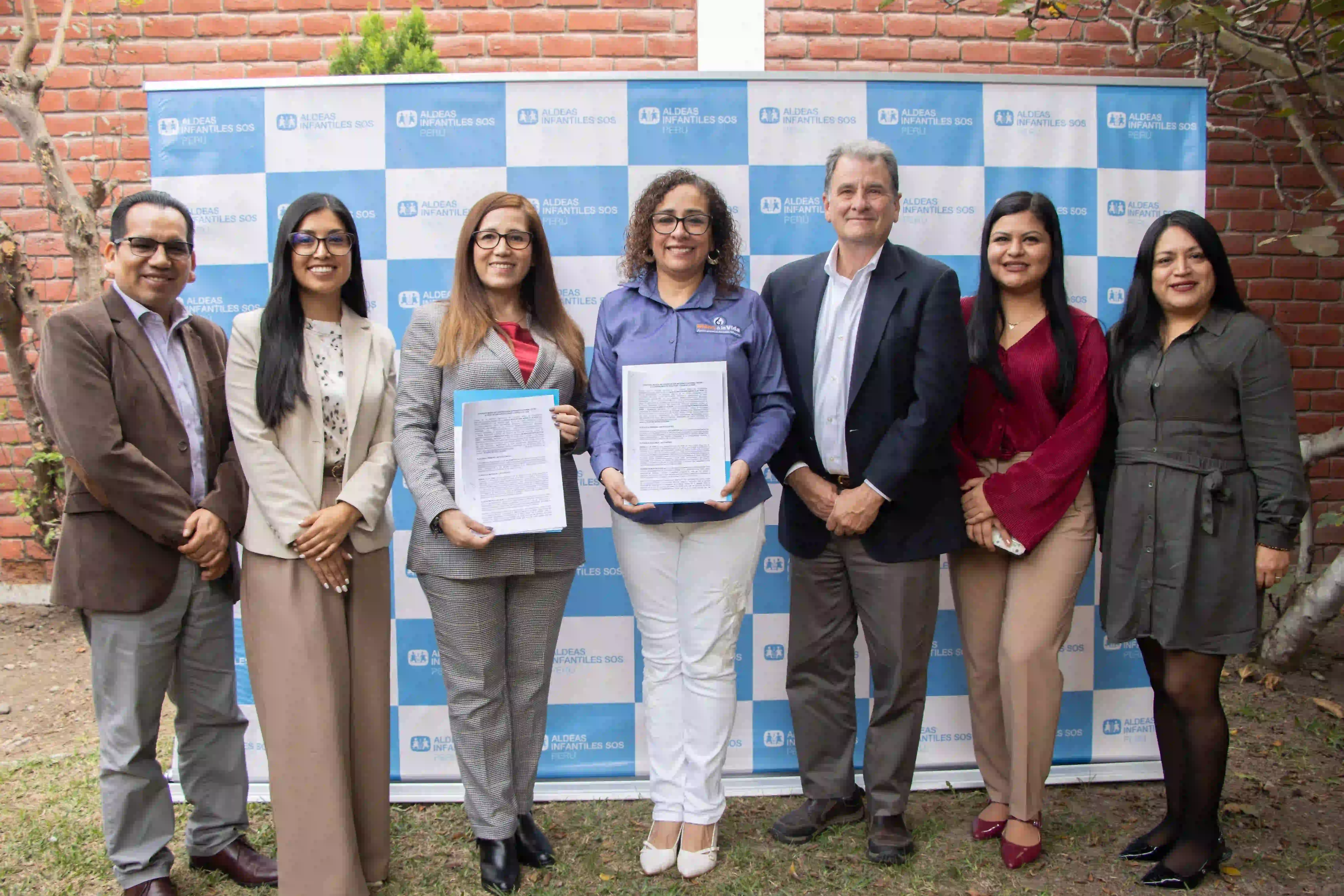
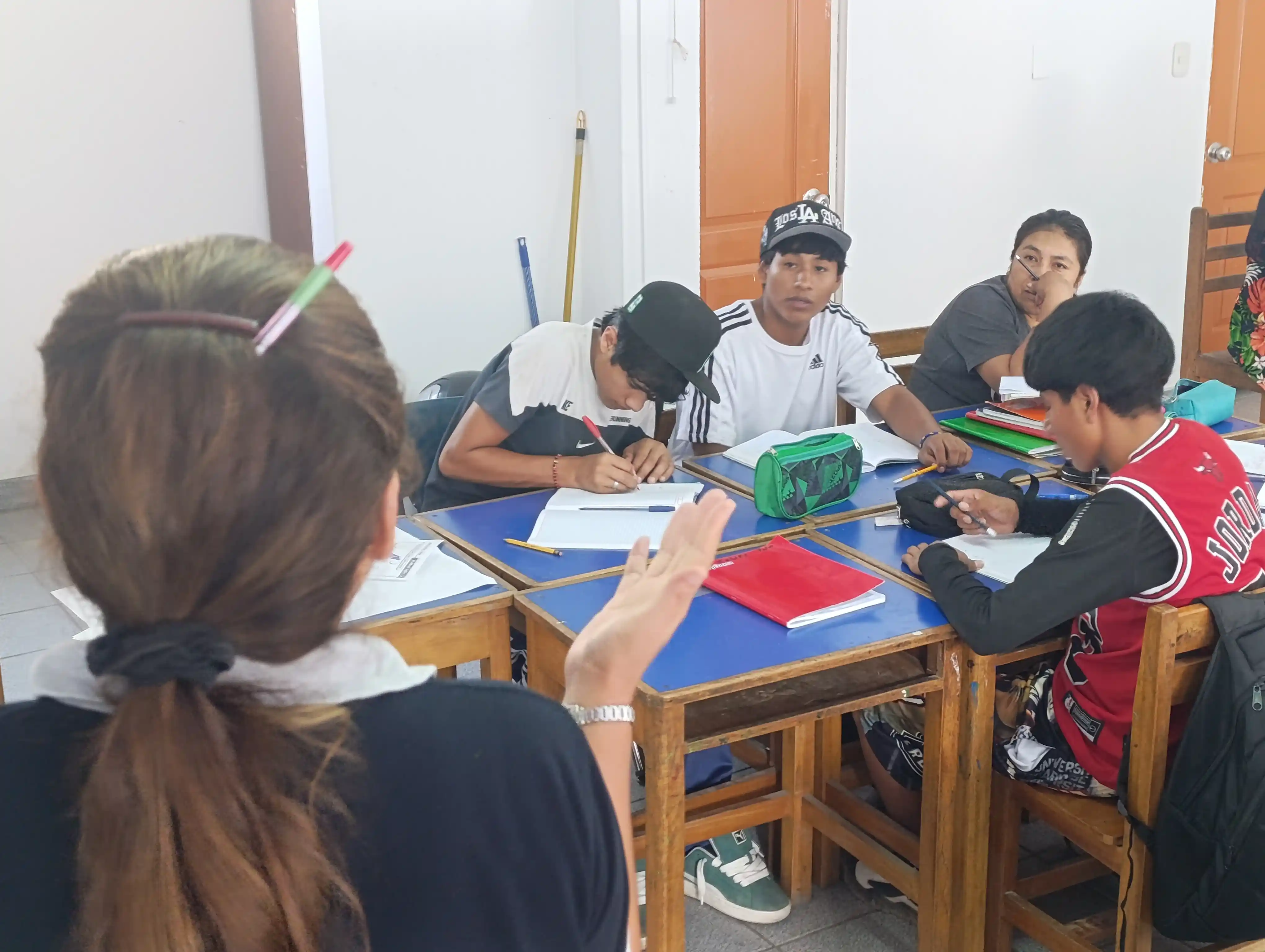
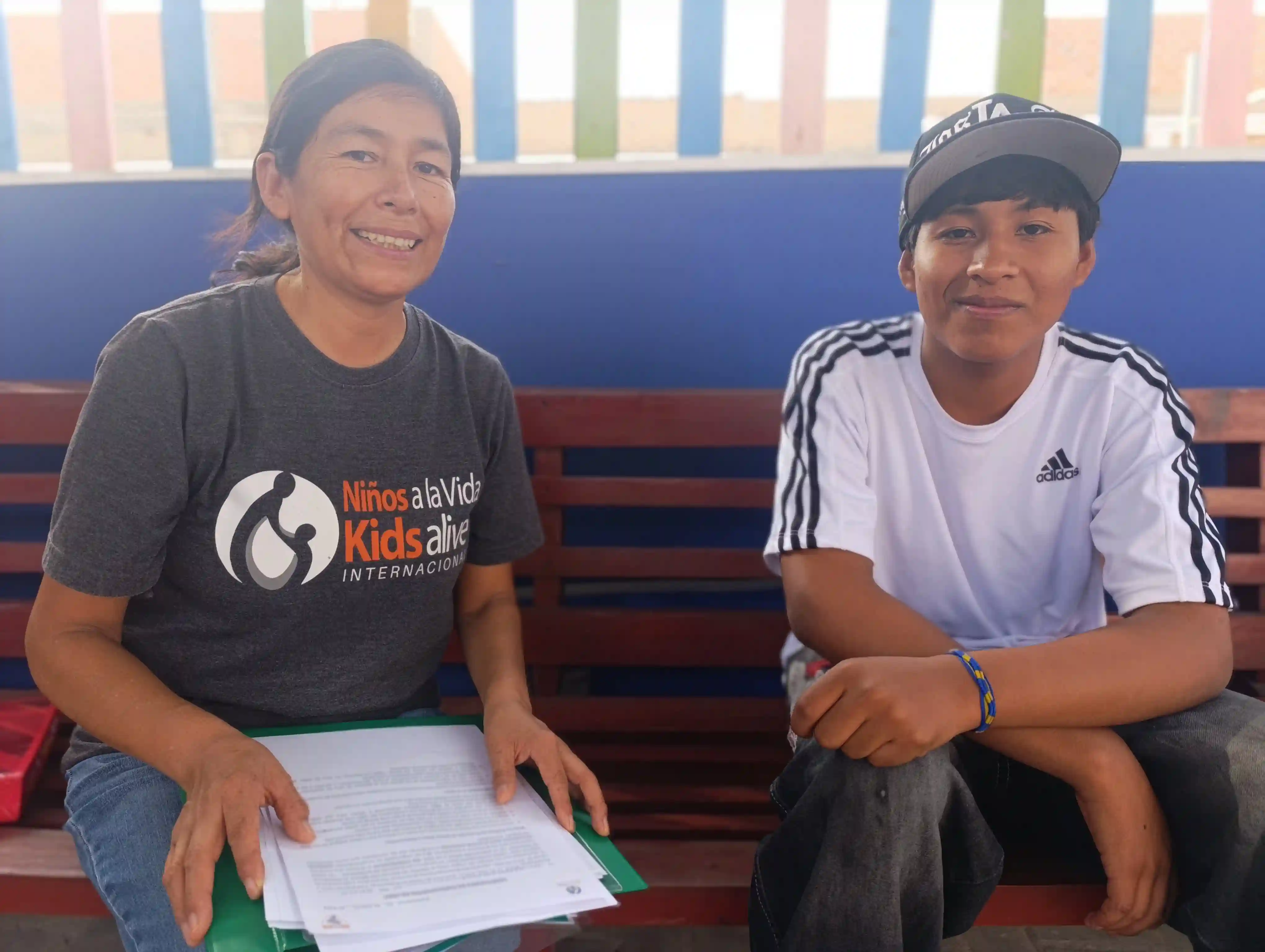
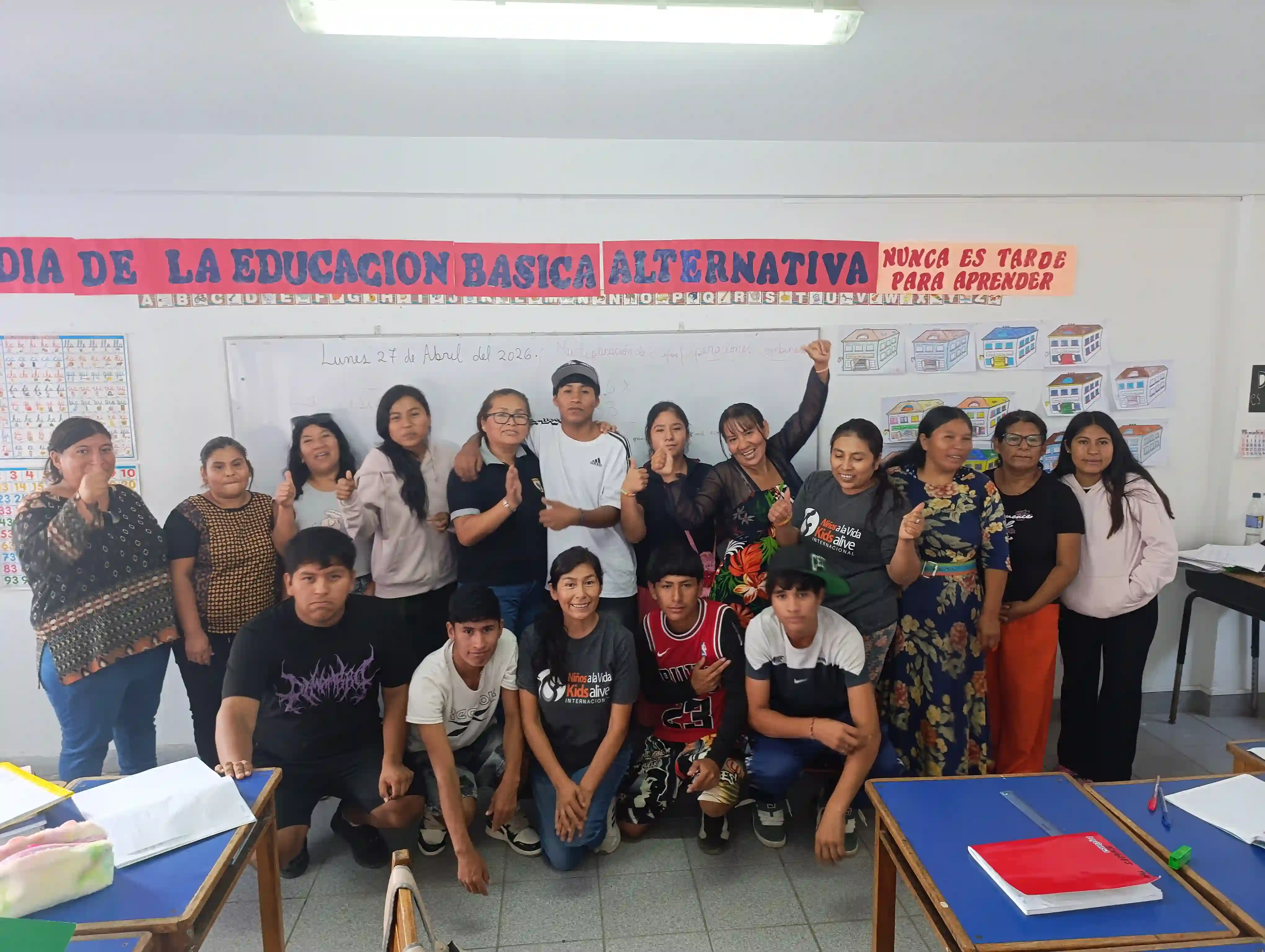
Then he heard about "CEBA," an alternative education program hosted through Kids Alive Peru in partnership with Peru's Ministry of Education. Designed for students whose education has been interrupted, the program offered Hugo something he never expected:
A second chance.
From his very first day at Kids Alive Peru, Hugo approached learning with determination. He arrived early, rarely missed class, and eagerly tackled lessons that many younger students take for granted. But what transformed him wasn't simply learning letters and numbers.
It was discovering that he was capable of learning after all.
His teacher, Ms. Jenny, recognized that Hugo needed more than academic instruction. She encouraged him to let go of shame, stop comparing himself to others, and focus instead on the future God was placing before him. Whenever he made mistakes, she reminded him that growth comes one step at a time.
Hugo listened to her repeat affirmations again and again, and eventually he began to believe them.
Today, one of his favorite subjects is mathematics.
"If I make a mistake," he says, "I repeat again and again. I don't give up."
That perseverance has produced remarkable growth. In less than a year, Hugo progressed from knowing no letters at all to working at a fourth-grade academic level—an extraordinary milestone for someone who once believed education was beyond his reach.
Yet some of the most important lessons weren't found in a textbook.
As Hugo grew in confidence, he also began experiencing healing in his heart.
For years, it would have been easy to blame his parents for the opportunities he missed. Instead, through the encouragement of his teachers and the Christ-centered support he received at Kids Alive Peru, Hugo discovered the freedom that comes through forgiveness.
"I don't blame my parents for not being able to study," he explains. "We all make mistakes. I will start from my current reality and move forward. That's something they taught me here at Kids Alive. It gives me peace."
That new perspective has reshaped the way he sees his future.
Today, Hugo dreams of completing high school, pursuing a technical career, and one day earning enough to support both himself and his family. He hopes his younger sister will also have the opportunity to continue her education, and he prays that his older brother—who also left school believing it was too late—will return so they can finish together. Rather than seeing himself as someone who fell behind, Hugo now hopes his own journey will encourage others to keep going.
Hugo's story reflects a truth he is beginning to believe:
God creates every child with unique gifts, purpose, and potential. Sometimes those gifts are discovered early. Other times, they emerge through second chances, patient teachers, and the courage to begin again. Hugo's story reminds us that a delayed beginning does not diminish God's design. The Master Artist is still at work.
As Scripture reminds us:
"For we are God's masterpiece. He has created us anew in Christ Jesus, so we can do the good things he planned for us long ago."(Ephesians 2:10)
Today, Hugo still has many lessons ahead of him. He is still learning to read, still building new skills, and still pursuing the dreams God has placed on his heart. But the teenager who once believed he had missed his opportunity now walks into the classroom with confidence, determination, and hope.
He is discovering that education is about more than catching up.
It is about becoming the person God created him to be.
Become a Safe Haven Champion
Become a Safe Haven Champion today today and help children and families experience healing together as bonds mend and futures are renewed.
Why Healing a Child Means Healing a Family: Download our free resource guide to learn how Family Systems Therapy can help families break unhealthy cycles, strengthen relationships, and build a healthier future together.


.webp)

.webp)
.webp)
.webp)