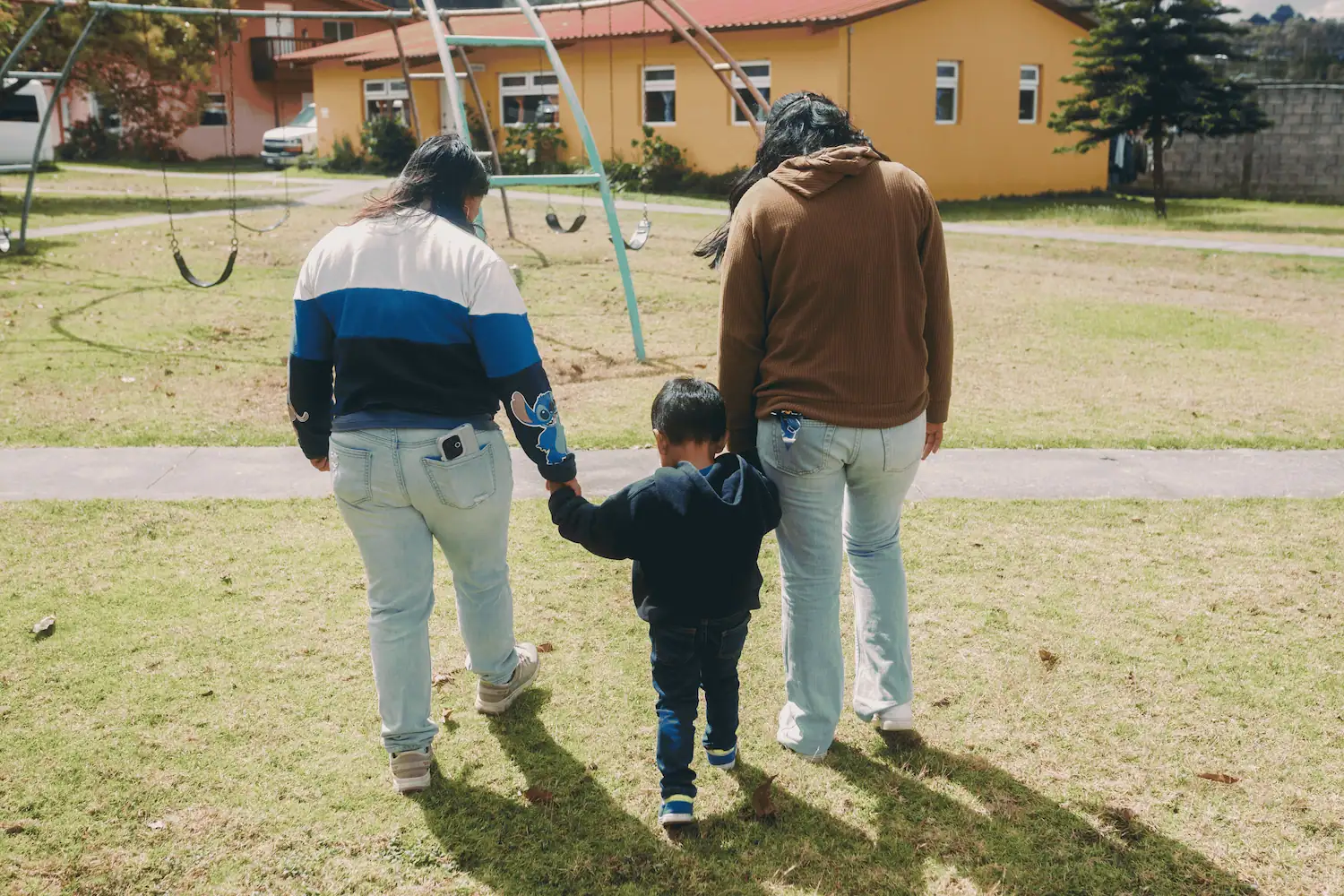
In early September, 25 new students joined our school! The newest class of three-year-olds was chosen from among the most needy families living within a mile of the school. And now, these new kids are getting into the rhythm of life at their new school - studying, hanging out with friends, celebrating birthdays, and having fun.
In many cases, these children have teenage moms and absentee dads; consequently, the children wind up being raised by their grandmothers. Tragically, this is a common situation among the poor in the Dominican Republic. At Santo Domingo North school, we usually have more student-candidates than space in a classroom, so it is quite challenging to decide on whom to admit.
On the positive side, those who join our school are far more likely to graduate from high school, be healthy emotionally, physically, and spiritually, and have a positive impact on their family and community. Please pray that each of these new students will grow to be agents of change for God in their homes, families, communities, and country.
Most people want to belong by feeling connected, included, and cared for. Yet for many, relationships have been marked by division, competition, or isolation instead of safety and support.
This is why the value of brotherly kindness matters so deeply. It speaks to how we live with one another: not as strangers or rivals, but as loving community. It invites us to move toward one another with empathy, patience, and intentional care, even when it feels difficult. In doing so, we begin to rebuild trust and create spaces where people can truly experience belonging.
At Kids Alive International, brotherly kindness is not an abstract idea. It is a daily practice that helps turn shared spaces into places of healing.
What Is Brotherly Kindness?
The Bible gives us a clear instruction:
“And this commandment we have from Him: whoever loves God must also love his brother.” (1 John 4:21)
Brotherly kindness means treating others like family — with care, patience, and responsibility for one another’s well-being.
For children, brotherly kindness can be understood simply as:
Helping each other
Staying together
Choosing care instead of harm
Remembering that no one is alone
It means noticing when someone is struggling and offering support. It means choosing inclusion instead of exclusion. It means recognizing that belonging is something we protect — together.
Let’s Reflect:When you hear the word “brother” or “sister,” what comes to mind — connection, conflict, responsibility, or care?
Why Brotherly Kindness Matters
Many people have experienced relationships where kindness was inconsistent or conditional. Some learned early on that looking out for themselves was safer than trusting others.
Brotherly kindness gently challenges that belief. It reminds us that God's love is meant to shape how we treat people — especially those closest to us.
"A new command I give you: Love one another. As I have loved you, so you must love one another. By this everyone will know that you are my disciples, if you love one another.” (John 13:34-35)
This kind of kindness:
Builds trust where there has been fear
Creates safety where there has been instability
Strengthens community where there has been division
At Kids Alive, brotherly kindness shows up when people choose to be present for one another — not perfectly, but consistently.
Let’s Reflect:Where do you see a need for more kindness and togetherness in your community or relationships?
Kindness That Is Active, Not Passive
Brotherly kindness is not just about being nice. It is about taking action when someone needs support.
It looks like:
Offering help instead of turning away
Standing with someone instead of leaving them alone
Choosing cooperation instead of competition
Making room for others to belong
This kind of kindness requires courage. It asks people to look beyond themselves and consider the needs of the group. It teaches that strength grows when people care for one another.
Do nothing out of selfish ambition or vain conceit. Rather, in humility value others above yourselves,not looking to your own interests but each of you to the interests of the others. (Philippians 2:3-4)
Let’s Reflect:Who might God be inviting you to notice or support today?
Learning to Live as One Family
Scripture describes believers as one family — brothers and sisters connected by love for God. Brotherly kindness is how that family stays strong.
Growing together requires:
Patience when relationships feel difficult
Forgiveness when mistakes are made
Commitment to staying connected even when it’s uncomfortable
Brotherly kindness does not mean everyone agrees or feels close all the time. It means choosing unity over division and care over isolation.
Let’s Reflect:What does “being together” look like in your life right now — and where might it need strengthening?
Holding On to What Is True
Brotherly kindness reminds us that no one is meant to walk alone. It reflects God’s heart for community — a place where love is lived out through shared care and responsibility.
Each time kindness is practiced, it strengthens bonds and creates space for healing. Over time, it turns groups of individuals into families marked by trust and belonging.
Growth in kindness takes time. But it is sacred.
For those who want to explore this value more deeply, Kids Alive International offers free resources designed to support reflection and growth:
📘 Renewing Identity — exploring core identity truths that foster healing and restoration 🌿 Rooted Values — understanding how identity grows into everyday values
Each resource invites readers to continue the journey of becoming — learning how to love God by caring for one another with kindness, presence, and unity.
For many people who have experienced hardship, the word power can feel complicated.
Power may be associated with control, harm, or being overpowered by circumstances or other people. Some have learned to believe they have very little power at all — that life simply happens to them, and they must endure it quietly.
Underneath that belief often lives a quiet question: Do I have what it takes to keep going? Can anything in my life really change? Am I strong enough to overcome what I’ve been through?
This is why the identity truth "I am powerful" matters and why it’s so important to understand what it truly means.
At Kids Alive International, this declaration is never about dominance, force, or self-reliance. It is about strength rooted in Christ — strength that restores dignity, builds resilience, and empowers a person to live fully.
What “I Am Powerful” Really Means
Scripture offers this grounding truth:
“I can do all this through Him who gives me strength.” (Philippians 4:13)
This verse does not promise unlimited ability or effortless success. Instead, it points to a deeper reality: true power does not come from within ourselves alone — it flows from Christ.
To say “I am powerful” means recognizing that, through Christ, you have what it takes to live with dignity, love, grace, and kindness—no matter your circumstances. It means believing that God provides the strength to persevere, to heal, to make life-giving choices, and to reflect His character even when life feels difficult.
This kind of power does not come from controlling others or relying on ourselves. It comes from knowing whose we are and trusting that Christ is at work within us.
Let’s Reflect: When you think about strength, do you picture self-reliance — or dependence on God?
Power That Heals, Not Harms
Many people affected by trauma have experienced power used wrongly — to control, silence, or hurt. As a result, power can feel unsafe or unfamiliar.
But the power God offers looks different.
God’s power:
Restores rather than dominates
Strengthens rather than shames
Protects rather than exploits
Brings life instead of fear
God’s power gives us the ability to choose love over bitterness, grace over retaliation, and hope over despair. It reminds us that our circumstances do not have the final word about who we are or how we will live.
"For the Spirit God gave us does not make us timid, but gives us power, love and self-discipline." (2 Timothy 1:7)
Power in Christ helps us become who we were created to be.
Let’s Reflect: Where have you learned to associate power with harm rather than healing?
Strength to Overcome the Past
Being powerful in Christ does not mean pretending the past did not happen. It means the past no longer gets to define the future.
Through Christ’s strength:
The past can be faced without being relived
Temptations can be resisted without shame
Healing can begin without rushing
Life can be lived with freedom instead of fear
This is the kind of power that leads to abundance — not in possessions or ease, but in peace, purpose, and restored identity.
Let’s Reflect:What part of your past feels hardest to believe you can overcome — and what would it mean to invite Christ’s strength into that place?
Living From Christ-Given Power
When people begin to believe they are powerful in Christ, their daily lives begin to shift. Not because everything becomes easy — but because they are no longer walking alone.
"So do not fear, for I am with you; do not be dismayed, for I am your God.I will strengthen you and help you; I will uphold you with my righteous right hand." (Isaiah 41:10)
This identity often shows up in everyday choices:
Saying no to what harms and yes to what heals
Persevering through setbacks with hope
Making choices rooted in truth rather than fear
Continuing forward even when growth feels slow
These moments may seem small, but they are powerful. They reflect a life learning to draw strength from God instead of striving alone.
Let’s Reflect:Where might God be inviting you to rely on His strength instead of your own?
Holding On to What Is True
“I am powerful” does not mean life is easy or that we never struggle. It means that, through Christ, we have what it takes to live with dignity, love, grace, and kindness regardless of what we face.
It reminds us that our circumstances do not define us: God does. His strength enables us to keep moving toward healing, to choose hope over fear, and to become the people He created us to be.
Identity work is often slow, but it is sacred. As this truth takes root, it renews the heart, mind, soul, and strength, helping us discover that true power is not found in control, but in a life surrendered to Christ.
For those who want to explore this truth more deeply, Kids Alive International offers free resources designed to support reflection and growth:
📘 Renewing Identity — exploring core identity truths that foster healing and restoration 🌿 Rooted Values — understanding how identity grows into everyday values
Each resource invites readers to continue the journey of becoming — grounded in hope, strengthened by grace, and confident that through Christ, they are powerful.
For many people, the heaviest burden they carry is not what others can see — it is what they feel inside.
Shame. Guilt. The quiet sense of being marked by the past.
Sometimes this weight comes from choices we regret. Sometimes it comes from harm done to us — words spoken, boundaries crossed, pain inflicted that was never deserved. Over time, these experiences can leave a person feeling stained, unworthy, or beyond repair.
This is why the identity truth “I am clean” matters so deeply. It speaks directly to places where shame tries to settle — and offers freedom where heaviness once lived.
What “I Am Clean” Really Means
Scripture gives us this promise:
“If we confess our sins, He is faithful and just and will forgive us our sins and purify us from all unrighteousness.” (John 1:9)
This verse reveals the heart of God toward His people. God does not shame or condemn those who come to Him. Instead, He forgives. He cleanses. He restores.
To say “I am clean” means that forgiveness through Jesus is complete and trustworthy. It means sins are not only forgiven — they are washed away. And it also means that a person is not defined by the wrongs committed against them.
God’s cleansing reaches both places:
The things we have done
The things others have done to us
Let’s Reflect:When you hear the word “clean,” what feelings come up — relief, doubt, hope, resistance?
When Shame Tries to Define Identity
Shame often tells a powerful lie: This is who you are now.
It says the past is permanent. That mistakes are identity. That pain has the final word.
But Scripture tells a different story. God’s cleansing is not partial or fragile. It is faithful and just — rooted in His character, not our ability to fix ourselves.
At Kids Alive International, healing work consistently reveals this truth: when shame loses its power, identity begins to breathe again. People discover they are not broken beyond hope. They are not dirty beyond cleansing. They are not condemned beyond grace.
Let’s Reflect:What lie about yourself might God be inviting you to release?
Clean Does Not Mean “It Never Happened”
Being clean does not mean pretending pain never occurred. God’s forgiveness does not erase memory or minimize harm. Instead, it separates identity from experience.
To be clean means:
The past no longer defines who you are
Guilt no longer owns your future
Shame no longer gets the final say
God’s cleansing makes space for healing — not by denying what happened, but by redeeming what was broken.
For those who carry wounds inflicted by others, this truth is especially important. Being clean means the harm done to you does not belong to you. It was never yours to carry.
“Come to me, all you who are weary and burdened, and I will give you rest. Take my yoke upon you and learn from me, for I am gentle and humble in heart, and you will find rest for your souls.” - Jesus (Matthew 11:28-29)
Let’s Reflect:What would it look like to let God hold the weight you were never meant to bear?
Learning to Live in Freedom
When people begin to believe they are truly clean, something shifts. They stop hiding. They stop striving to earn worth. They begin to live more honestly and freely.
This identity often shows up in everyday ways:
Choosing openness instead of secrecy
Practicing forgiveness — toward oneself and others
Receiving grace without shame
Walking forward without constantly looking back
These are not signs of perfection. They are signs of freedom.
Let’s Reflect:How might your daily choices change if you truly believed you were forgiven and made clean?
Holding On to What Is True
“I am clean” does not deny sin, struggle, or pain. But it places them within a greater truth — one where God’s mercy is stronger than shame and His forgiveness is complete.
Each time this truth is spoken, remembered, or practiced, it loosens shame’s grip and makes room for renewal of the heart, mind, soul, and strength.
Identity work is slow. But it is sacred.
For those who want to explore this truth more deeply, Kids Alive International offers free resources designed to support reflection and growth:
📘 Renewing Identity — exploring core identity truths that foster healing and restoration 🌿 Rooted Values — understanding how identity grows into everyday values
Each resource invites readers to continue the journey of becoming — living free, restored, and grounded in the unchanging promise that in Christ, they are made clean.